The Freedom to Choose Later
We are living through a period of growing political uncertainty, social tension and economic change. Across the United States, Brazil and France, different pressures are influencing household confidence, business planning and investment decisions.
In the United States, the November 2026 midterms are introducing another layer of policy uncertainty for investors. S&P Global Market Intelligence notes that market performance ahead of past midterms has varied considerably, a reminder that political headlines alone do not reliably predict returns [1]. Reuters reported that US consumer confidence fell to a roughly twelve-and-a-half-year low in September 2026, reflecting concerns about employment and economic prospects [2].
Brazil faces a presidential runoff on 25 October. Analysis by the Peterson Institute for International Economics highlights uncertainty over the direction of economic policy [3], while Reuters has reported investor concerns about the fiscal outlook regardless of the electoral outcome [4].
In France, recent unrest has coincided with pressure on government borrowing costs and financial markets. Reuters reported a 13-basis-point rise in the French ten-year sovereign yield to approximately 4.9% on 19 October 2026, alongside declines in French bonds and equities [5]. This is a market reaction observed at a particular moment, not evidence that demonstrations alone caused all financial movements.
These developments are not identical, nor do they mean that any one country is unsuitable for living or investment. They do, however, illustrate why families and investors increasingly value optionality, diversification and informed long-term planning.
Where Governments Reach Their Limits
Governments remain essential to public safety, infrastructure and economic stability. Yet rising living costs, housing shortages, demographic pressures and fiscal constraints create difficult trade-offs. Private enterprise can complement public institutions by mobilising capital, developing projects and connecting people with cross-border opportunities.
The objective should not be to replace government, but to contribute responsibly where private expertise, investment and execution can create durable value.
When Moving Becomes a Hedge
International relocation was once principally associated with employment, education or lifestyle. Today, it is also part of a broader conversation about resilience: where to live, how to diversify assets, how to access education and how to maintain options for the future.
For American, Brazilian and French families alike, establishing a second international foothold may provide flexibility. Yet residency rights, property ownership and investment eligibility are distinct matters; each requires its own legal, financial and tax assessment.
The freedom to make informed choices across borders is increasingly valuable — not because uncertainty can be eliminated, but because options can be expanded.
What the Numbers Say About Portugal
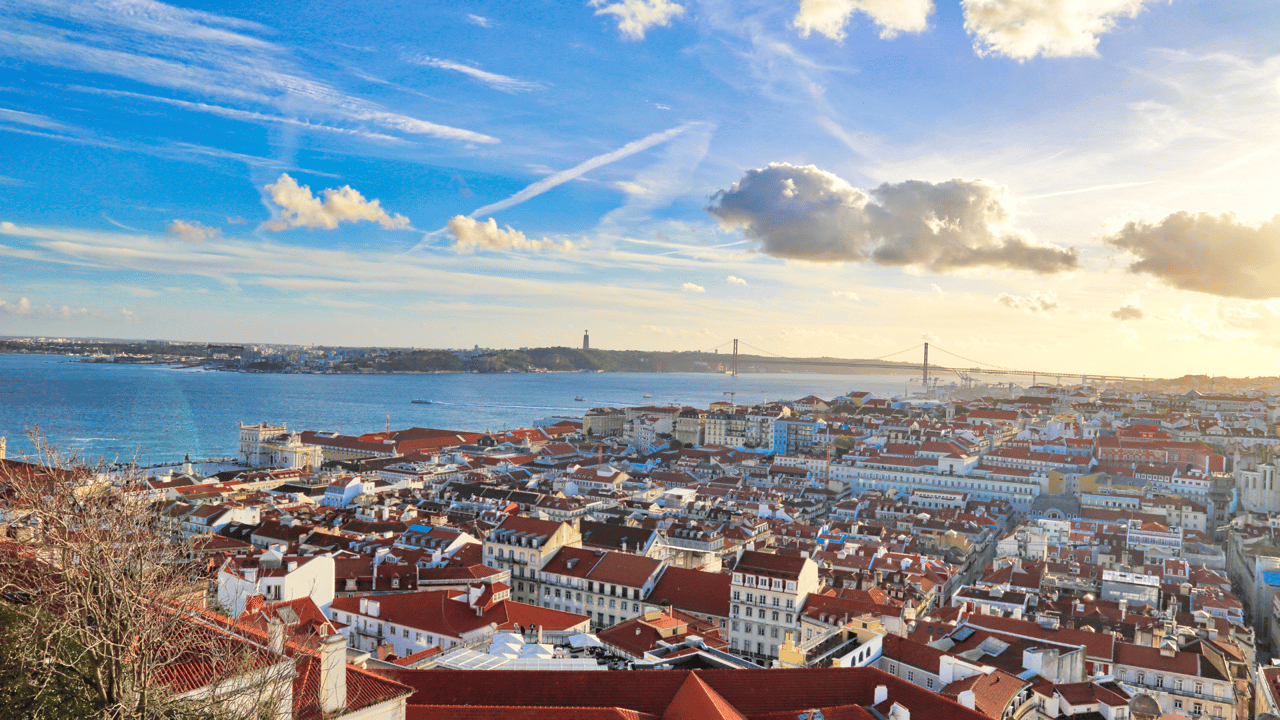
Portugal offers a combination of European Union access, transatlantic connections, climate, cultural appeal and established international communities. For Brazilians, the common language provides an additional bridge; for Americans, Portugal offers a European base; and for French residents, proximity and EU integration support mobility.
Its relative peacefulness is a measurable strength: Portugal placed seventh in the 2026 Global Peace Index, which considers societal safety, conflict and militarisation across 163 countries and territories [6]. This is a composite peace ranking, not a guarantee against crime or risk in any particular location.
Portugal also has an established international resident population. AIMA recorded 1,543,697 foreign residents in 2024, including 484,596 Brazilians [7]. This is a resident population stock, not the number of people arriving in a single year.
The country has attracted substantial international capital. Banco de Portugal reported €8.5 billion in inward foreign direct investment transactions during 2025, including €3.9 billion of real-estate-related equity investment. At year-end, the stock of inward FDI reached €213.7 billion, equivalent to approximately 70% of GDP [8]. These figures describe investment flows and stocks, not investor returns or the value of all property purchases.
Tourism provides another window into international demand: Portuguese accommodation establishments recorded 32.5 million guests and 82.0 million overnight stays in 2025, with non-residents accounting for 69.5% of overnight stays [9]. The United States represented 9.6% and France 7.4% of total overnight stays among source markets [10]. Tourism volumes are not the same as migration or investment, but they demonstrate international engagement with the country.
Portugal’s opportunity lies not in promising immunity from global uncertainty, but in combining quality of life, international access and a range of investable sectors within one market.
Each of these is a historical observation, not a forecast. A peace ranking is a composite index, a resident population is a stock rather than an annual inflow, and FDI figures describe capital movements — none of them describes the return on any individual investment.

Opportunity Is Not the Same as a Good Deal
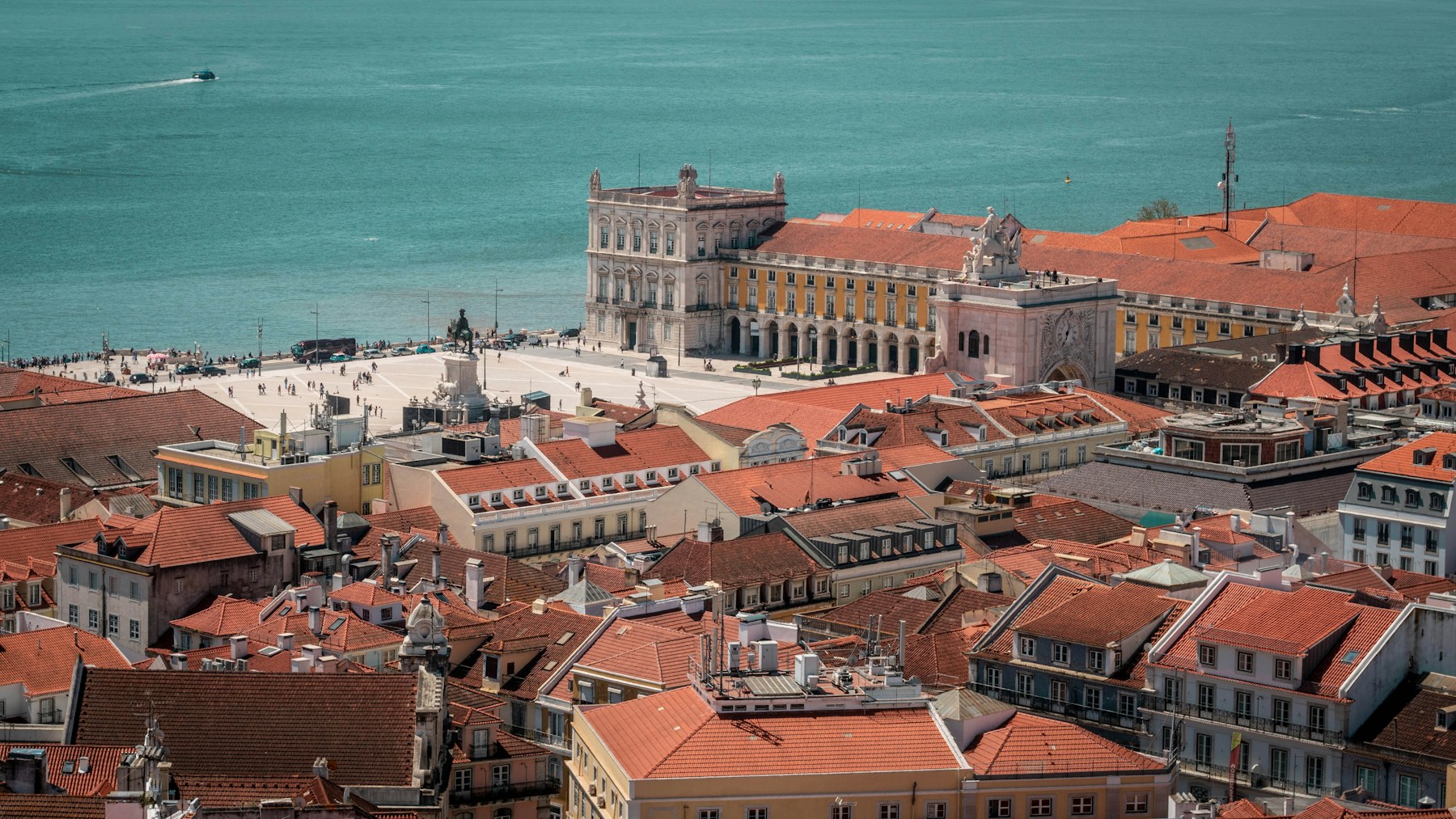
Portugal offers distinct possibilities in residential and commercial real estate, hospitality, tourism and development. Lisbon, Cascais, Porto, the Douro and the Algarve have different demand profiles and risk characteristics; there is no single investment case for the entire country.
Tangible property can provide use value and potential income, but it is not risk-free. Investors must assess acquisition costs, tax, planning and licensing, liquidity, financing, construction risk, operating assumptions and exit options. Past FDI and tourism growth do not establish future appreciation or yield.
Investment can also contribute to housing supply, regeneration and employment when projects are commercially viable and aligned with local needs. Responsible investment means recognising both investor objectives and the interests of the communities where capital is deployed.
Three Decisions That Arrive as One
At Atrium, we work across international mobility, real estate and investment advisory. Through Atrium Global Visa, Atrium Real Estate and Atrium Capital Partners, we aim to help clients understand decisions that often overlap.
A family relocating to Portugal may need residency guidance, a home search and financing support. An international investor may require an understanding of ownership structures, development approvals, counterparties and exit strategies. These are not isolated transactions; they are parts of a broader plan.
Our role is not simply to introduce opportunities, but to help clients ask the right questions, understand the risks and make informed decisions.
What Advice Owes the Client
In a fragmented environment, trust, transparency, competence and integrity matter. Clients need advice that recognises their priorities and challenges assumptions when necessary. Not every opportunity suits every client.
For me, success should not be measured exclusively by completed transactions or financial results. It should also be measured by the relationships we build, the value we create and the integrity with which we conduct ourselves.
What I Would Watch From Here
Political uncertainty will continue to influence public debate and investment sentiment. It should prompt careful analysis rather than fear-based decisions.
For internationally minded families and investors, Portugal offers a compelling subject for serious consideration — supported by measurable indicators of peacefulness, an established international community, substantial foreign investment and sustained visitor demand.
At Atrium, we aim to connect these possibilities with responsible advice and the professional expertise needed to evaluate them.
In an uncertain world, the greatest value we can offer is not simply access to opportunities, but the confidence to make informed decisions about the future.

Where These Numbers Come From
Data and reporting available as of 21 October 2026. Numbered references correspond to the citations in the article above.
spglobal.com
reuters.com
piie.com
investing.com
investing.com
portugalglobal.pt
home-affairs.ec.europa.eu
bpstat.bportugal.pt
travelbi.turismodeportugal.pt
travelbi.turismodeportugal.pt
Editorial note. Figures are historical observations, not forecasts or guarantees. This article is commentary and does not constitute legal, tax or investment advice.
Mobility and Portugal, Answered
What is this article about?
It examines why political and economic uncertainty in the United States, Brazil and France is leading families and investors to value optionality, and what measurable evidence exists for Portugal as an international base. It is commentary supported by published data, not a forecast.
Why are international families looking at Portugal?
Portugal combines European Union access, transatlantic connections, climate and established international communities. It placed seventh of 163 countries and territories in the 2026 Global Peace Index, and AIMA recorded 1,543,697 foreign residents in 2024, including 484,596 Brazilians.
How much foreign investment does Portugal attract?
Banco de Portugal reported €8.5 billion of inward foreign direct investment transactions during 2025, including €3.9 billion of real-estate-related equity investment. The stock of inward FDI reached €213.7 billion at year-end, around 70% of GDP. These figures describe capital flows and stocks, not investor returns.
Is Portuguese property a safe investment?
No property is risk-free. Lisbon, Cascais, Porto, the Douro and the Algarve have different demand profiles and risk characteristics, so there is no single investment case for the country. Acquisition costs, tax, planning and licensing, liquidity, financing, construction risk and exit options all need their own assessment, and past growth does not establish future appreciation or yield.
Does Atrium provide legal or tax advice?
No. Atrium advises across international mobility, real estate and investment through Atrium Global Visa, Atrium Real Estate and Atrium Capital Partners, and works alongside the legal, financial and tax professionals who provide formal advice. Residency rights, property ownership and investment eligibility are distinct matters and each requires its own assessment.
Rua do Almada 577, Cedofeita, Porto
Weighing your options?
Residency, property and investment are separate decisions that tend to arrive together. We can help you see how yours fit.
Expanding your options, not eliminating uncertainty
Mobility, property and investment are three separate assessments that usually arrive as one decision. We can walk you through how they interact before you commit to any of them. Consultations are always free.